Common Raised Bed Garden Pests and Responsible Prevention Methods
Every vegetable garden has insects, and most of them are harmless or helpful. The goal is not a bug-free garden but healthy plants with damage you can live with. Integrated pest management (IPM), promoted by the US EPA and university programs such as UC IPM, offers a step-by-step way to get there: identify the problem, prevent it where possible, and use the least risky effective control.
Key takeaways
- Identify the pest before doing anything; many insects are beneficial.
- Prevention (healthy soil, right plant in the right place, barriers, sanitation) does most of the work.
- Hand-picking, water sprays and row covers solve many small problems.
- If you use any pesticide, including organic products, read and follow the label exactly. This site does not provide pesticide application rates.
The IPM approach
- Monitor: inspect plants, including leaf undersides, a couple of times a week.
- Identify: confirm what the pest or problem is. Your state Extension office or a resource such as UC IPM can help.
- Decide whether to act: a few holes in leaves may not matter; heavy damage on young plants does.
- Prevent and control: start with cultural and physical methods; consider pesticides only if needed and appropriate.
- Evaluate: note what worked for next season.
Common raised bed pests
Aphids
Small, soft-bodied insects clustered on new growth and leaf undersides. Lady beetles, lacewings and parasitic wasps often keep them in check. A strong spray of water knocks many off. Heavy use of high-nitrogen fertilizer can encourage soft growth that aphids favor.
Cabbage worms and loopers
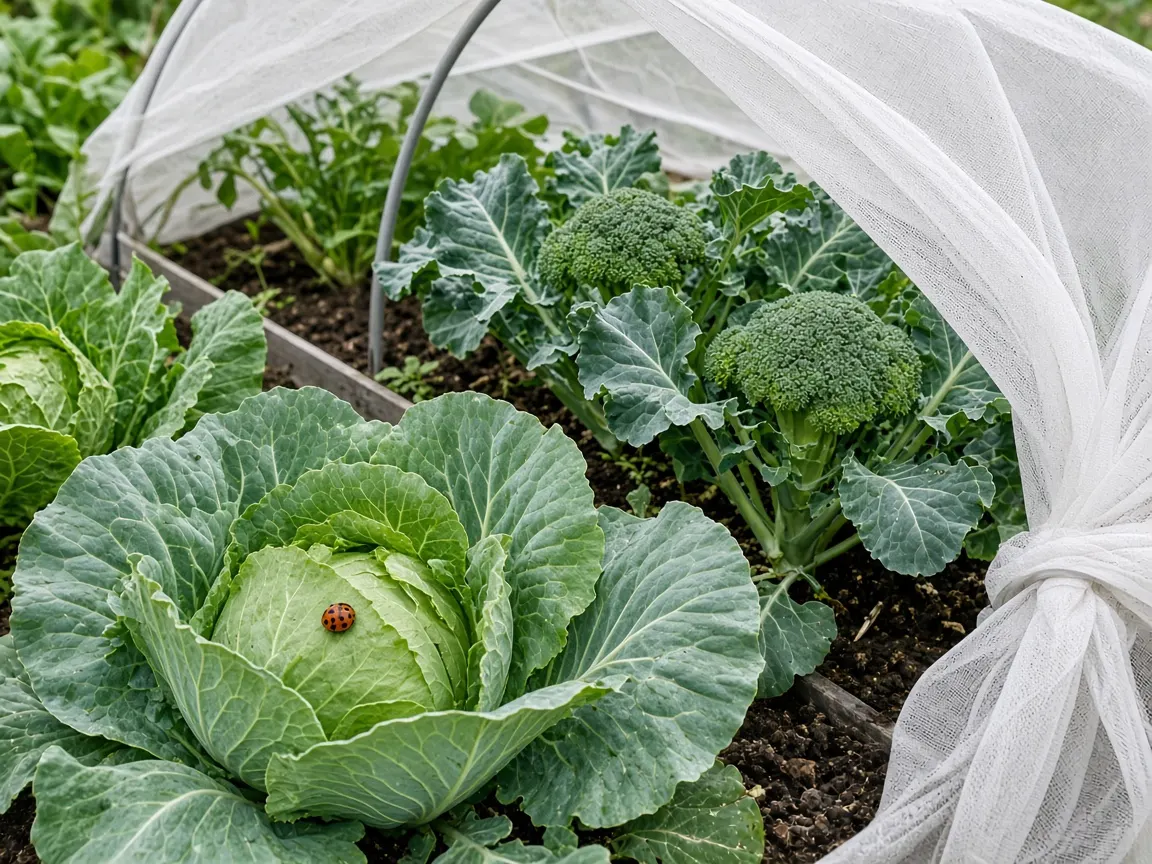
Green caterpillars that chew holes in cabbage, broccoli, kale and other brassicas. Covering crops with lightweight insect netting or row cover from planting prevents the moths from laying eggs. Hand-pick caterpillars you find.
Slugs and snails
Especially common in damp regions such as the Pacific Northwest and in shady, mulched beds. They feed at night, leaving ragged holes and slime trails. Hand-pick in the evening, reduce hiding places near young plants, and water in the morning rather than evening.
Flea beetles
Tiny jumping beetles that leave many small holes in leaves of eggplant, radishes, arugula and brassicas. Row cover over young plants is an effective barrier. Established plants often outgrow damage.
Squash bugs and squash vine borers
Squash bugs suck sap from squash and pumpkins; vine borers tunnel into stems, causing sudden wilting. Check leaf undersides for egg clusters and remove them. Row cover until flowering can protect plants in areas where vine borers are common; remove it when flowers open so pollinators can reach them.
Tomato hornworms
Large green caterpillars that can strip tomato foliage quickly. Look for dark droppings on leaves below, then hand-pick. Hornworms covered with small white cocoons have been parasitized by beneficial wasps; leaving them lets the wasps develop.
Prevention that works
- Healthy soil and proper spacing produce vigorous plants and allow air movement.
- Right timing: planting at the right time for your region helps crops avoid peak pest periods and stress.
- Row covers and netting are among the most effective physical barriers for raised beds. Remove them from crops that need insect pollination when they flower.
- Crop rotation: avoid planting the same plant family in the same bed year after year where possible.
- Sanitation: remove heavily infested or diseased plants and clean up debris at season's end.
- Habitat for beneficials: flowering herbs and plants such as dill, alyssum and marigolds near the garden can support predatory and parasitic insects.
- Resistant varieties: seed catalogs list disease-resistance codes for many tomatoes and other crops.
If you consider a pesticide
Pesticides, including those labeled organic or natural, can harm pollinators, beneficial insects, pets and people if misused. If you decide a product is necessary:
- Confirm the pest is listed on the product label and the crop is listed as allowed.
- Follow every label instruction, including the waiting period between application and harvest.
- Avoid spraying open flowers where bees are foraging.
- Store products in original containers away from children and pets.
The National Pesticide Information Center answers questions about pesticide safety. Your state Extension office can recommend options appropriate for your area.
Animals
Rabbits, deer, groundhogs, birds and squirrels can do more damage than insects. Fencing, netting and hardware cloth under beds (for burrowing animals) are the most dependable solutions. Check local wildlife regulations before trapping.
For seasonal timing that helps avoid pest pressure, see cool-season vegetables, and for mulch-related slug issues, see using mulch.
Sources and further reading
- Integrated Pest Management (IPM) Principles - US EPA
- UC Statewide Integrated Pest Management Program - University of California ANR
- National Pesticide Information Center (Oregon State University / US EPA)
- Find Cooperative Extension in Your State - Extension Foundation
Gardening conditions vary by location. For recommendations specific to your area, contact your state's land-grant university Cooperative Extension office. Read our editorial policy.