Starting Vegetable Seeds Indoors
Starting seeds indoors gives you a head start on the season and access to far more varieties than garden centers sell as transplants. It also takes daily attention for several weeks. This guide explains when to start, what equipment you actually need, and how to raise stocky, healthy seedlings.
Key takeaways
- Time sowing by counting back from your local average last spring frost date, not from a national calendar.
- Use a sterile seed-starting mix and clean containers with drainage.
- Strong light is the biggest factor in stocky seedlings; a sunny window is often not enough.
- Harden off seedlings for one to two weeks before planting outside.
Which crops to start indoors
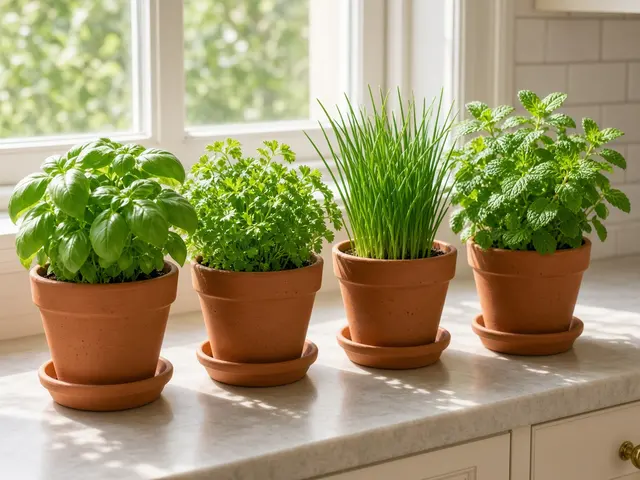
Crops that need a long season and transplant well are the usual candidates: tomatoes, peppers, eggplant, broccoli, cabbage, cauliflower, onions and many herbs and flowers. Crops that grow fast or dislike root disturbance, such as beans, peas, squash, cucumbers, corn, carrots and radishes, are usually sown directly in the garden, although squash and cucumbers can be started a few weeks early in individual pots.
When to start
Seed packets usually say something like "start indoors 6 to 8 weeks before last frost." To turn that into a date:
- Find your area's average last spring frost date from your state Extension service.
- Count back the number of weeks on the packet.
- Write the sowing date on a calendar for each crop.
As a general guide, many programs suggest starting peppers and eggplant earlier than tomatoes, and tomatoes earlier than fast crops like cucumbers. Starting too early produces leggy, root-bound plants that wait indoors too long. See understanding regional seed-starting calendars for examples from different parts of the country.
Equipment
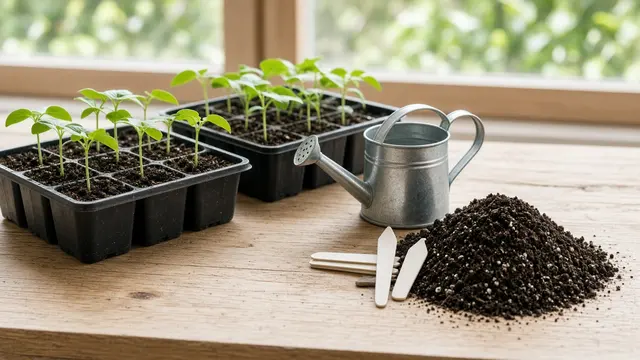
- Containers: cell trays, small pots or recycled containers with drainage holes. Wash reused containers and rinse them well.
- Seed-starting mix: a fine, sterile, soilless mix. Garden soil is too dense and may carry disease.
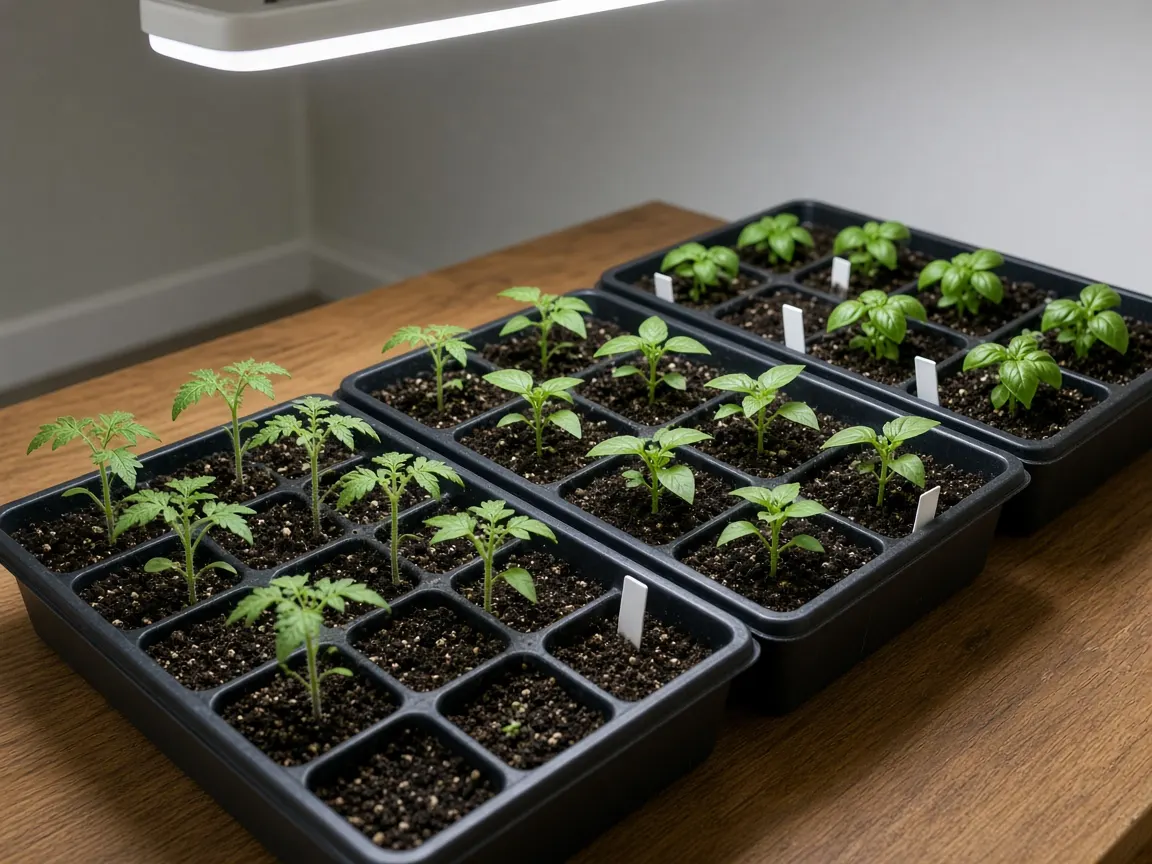
- Light: shop-style LED fixtures or grow lights, hung close above the seedlings and raised as they grow. Many growers run lights about 14 to 16 hours a day.
- Optional: a heat mat for warmth-loving seeds such as peppers and tomatoes, a clear dome for humidity, a small fan for air movement.
Sowing
- Moisten the mix before filling containers so it is damp but not dripping.
- Sow seeds at the depth on the packet; a common rule is about two to three times the seed's diameter. Some small seeds such as lettuce need light to germinate and are barely covered.
- Label every container with the crop, variety and date.
- Cover with a dome or plastic until seedlings emerge, then remove it to reduce disease.
Caring for seedlings
Light
As soon as seedlings appear, give them strong light. Weak light causes tall, thin, floppy stems. Keep lights close to the plants and adjust as they grow.
Water
Keep the mix evenly moist but not soggy. Watering from below, by setting trays in a shallow pan of water for a short time, helps avoid disturbing seeds. Overwatering and poor air circulation encourage damping-off, a fungal problem that causes seedlings to collapse at the soil line.
Temperature
Many vegetable seeds germinate best in warm conditions, but once up, seedlings generally grow stockier in slightly cooler air. Remove heat mats after germination.
Air movement
A gentle fan or lightly brushing your hand over the tops daily helps produce sturdier stems.
Feeding and potting up
Seed-starting mix has few nutrients. Once true leaves appear, feed with a diluted liquid fertilizer according to the label. If seedlings outgrow their cells before it is time to plant out, move them to larger pots.
Common problems
- Leggy seedlings: not enough light, or too warm.
- Collapsing at the base: damping-off; improve air flow, avoid overwatering, use sterile mix.
- Poor germination: old seed, too cold, or planted too deep.
- Yellowing: often low nutrients once the seed's reserves are used up.
Moving outside
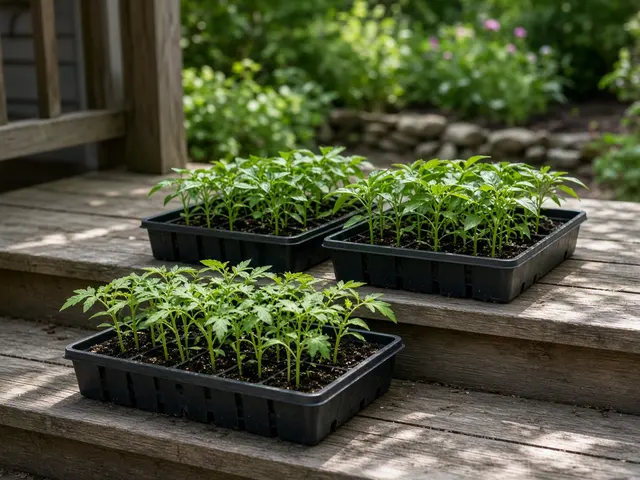
Before transplanting, seedlings need a gradual introduction to sun, wind and temperature swings. Follow the schedule in how to harden off seedlings.
Sources and further reading
- Starting Seeds Indoors - University of Maryland Extension
- Planting Vegetable Transplants - University of Maryland Extension
- Find Cooperative Extension in Your State - Extension Foundation
Gardening conditions vary by location. For recommendations specific to your area, contact your state's land-grant university Cooperative Extension office. Read our editorial policy.