How to Harden Off Seedlings Before Transplanting
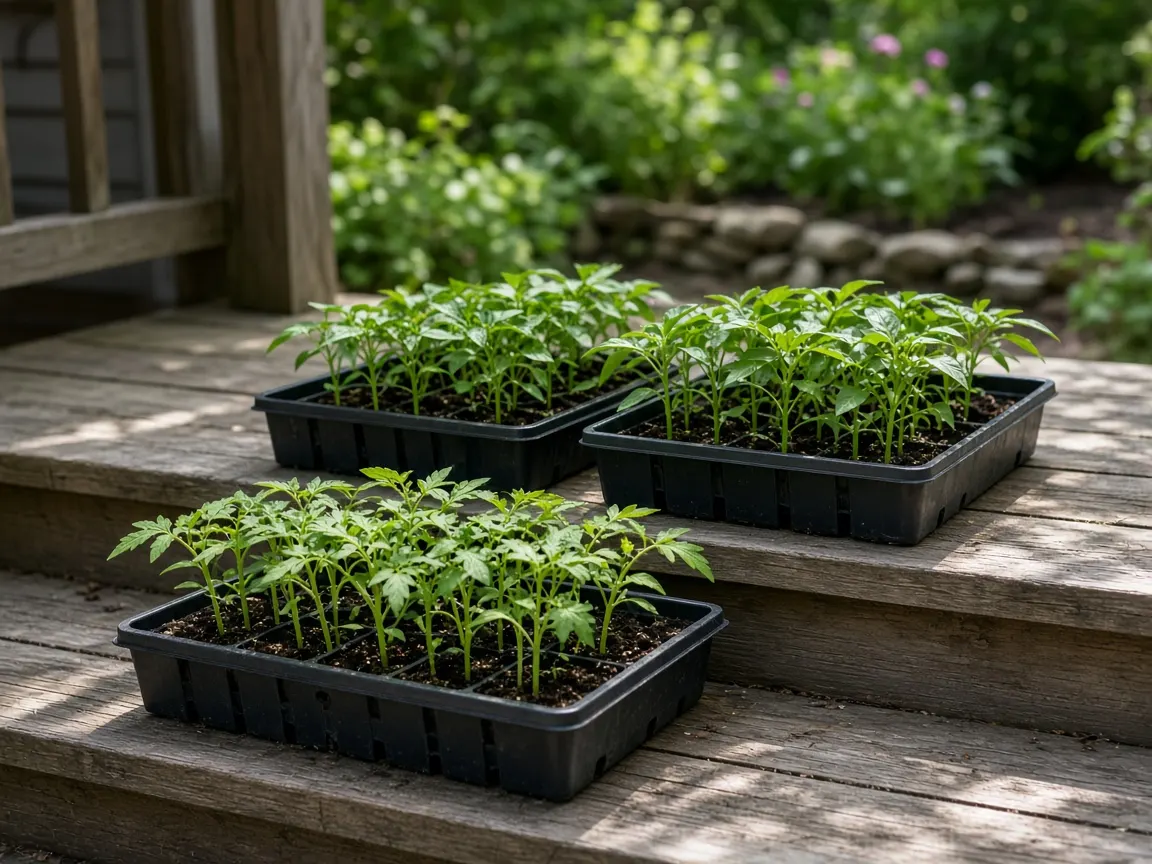
Seedlings raised indoors have never felt direct sun, wind or a cold night. Moving them straight into the garden can scorch leaves, snap stems and stall growth for weeks. Hardening off is the gradual process of getting them used to outdoor conditions, and it takes one to two weeks.
Key takeaways
- Start about 7 to 14 days before your planned transplant date.
- Begin in a shaded, sheltered spot for a few hours and increase exposure daily.
- University of Maryland Extension advises not putting tender seedlings out on windy days or when it is below 45°F.
- Bring warm-season crops such as tomatoes and peppers in if nights will drop below about 50°F.
Why it works
Indoor-grown seedlings have soft, tender tissue. Gradual exposure to sun, wind and cooler temperatures toughens leaves and stems and slows growth slightly, so plants are better able to cope after transplanting. University of Maryland Extension notes that hardening off is especially important for cabbage, broccoli and cauliflower, and that over-hardening some crops can cause problems, so the aim is a gentle transition, not stress.
A sample schedule
Adjust to your weather. On a cold, very windy or stormy day, skip a day rather than push ahead.
| Days | Outdoor exposure |
|---|---|
| 1–2 | 1 to 3 hours in full shade, sheltered from wind, during the mildest part of the day |
| 3–4 | 3 to 5 hours, mostly shade with a little gentle morning sun |
| 5–6 | About half the day, including a few hours of direct sun |
| 7–8 | Most of the day in the sun; bring in at night |
| 9–10+ | All day and, if nights are mild enough for the crop, overnight |
South Dakota State University Extension describes a similar 7- to 14-day process starting with three to four hours in a protected spot.
Temperature guidelines
- Cool-season crops (lettuce, cabbage, broccoli): University of Maryland Extension suggests bringing them in at night if temperatures are expected to fall below freezing.
- Warm-season crops (tomatoes, peppers, eggplant): bring in if night temperatures are expected below 50°F.
- Cucumbers and melons: very sensitive to cold; keep them in on cool nights.
Water during hardening off
Outdoor sun and wind dry small pots quickly. Check them at least daily, sometimes twice. Extension guidance suggests watering a little less often than indoors to slow soft growth, but never letting seedlings wilt.
Shortcuts and alternatives
- Cold frame: a bottomless box with a clear lid is an excellent hardening space; prop the lid open more each day.
- Wagon or tray: keeping flats on a cart makes moving them in and out easy.
- Purchased transplants: garden center plants grown in a greenhouse may also need a few days of hardening.
Transplant day
- Choose a calm, cloudy day or late afternoon if possible.
- Water seedlings a few hours before planting.
- Handle plants by the leaves or root ball, not the stem.
- Plant at the depth recommended for the crop; tomatoes can be planted deeper than they grew in the pot.
- Water in well and watch for wilting over the next few days.
Not sure when your transplant date should be? See regional seed-starting calendars. For raising the seedlings in the first place, read starting vegetable seeds indoors.
Sources and further reading
- Hardening Off Vegetable Seedlings for the Home Garden - University of Maryland Extension
- Planting Vegetable Transplants - University of Maryland Extension
- Harden Your Transplants Prior to Planting Your Garden - South Dakota State University Extension
Gardening conditions vary by location. For recommendations specific to your area, contact your state's land-grant university Cooperative Extension office. Read our editorial policy.