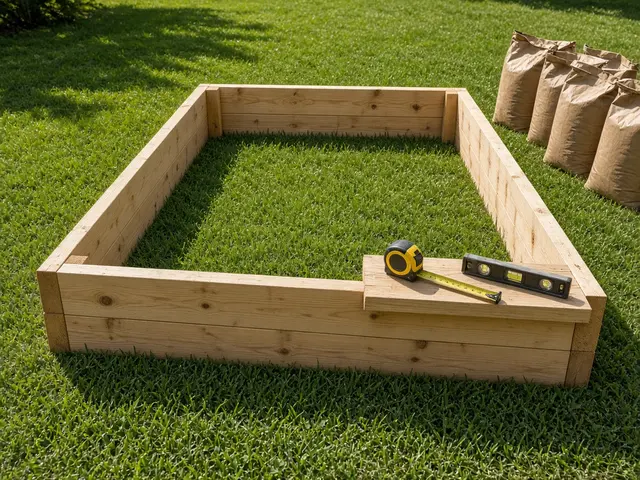
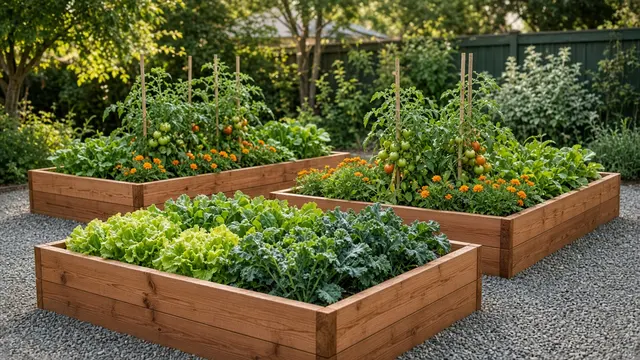
Raised Garden Bed Dimensions: Width, Length and Depth Explained
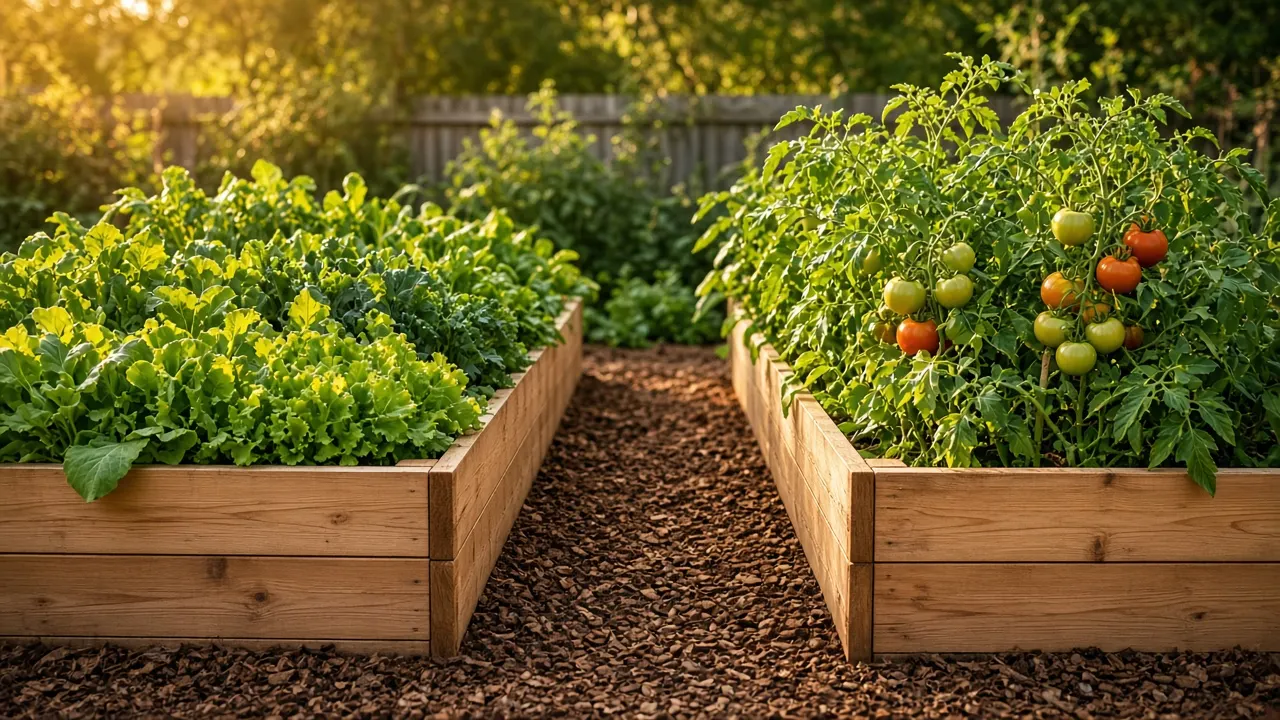
There is no single "correct" raised bed size, but a few dimensions are recommended so consistently by Cooperative Extension programs that they make a reliable starting point. The goal is a bed you can reach across without stepping in, deep enough for your crops, and spaced so you can move comfortably between beds.
Quick reference
| Dimension | Common guidance |
|---|---|
| Width (access from both sides) | No more than about 4 ft |
| Width (access from one side) | About 2 to 3 ft |
| Length | Any; 8 ft is common for lumber |
| Depth for most vegetables | About 12 to 18 in of soil |
| Path width | 18 in minimum; about 3 ft for a wheelbarrow |
Width: the reach rule
The most important dimension is width. You should be able to reach the center of the bed from the edge without stepping on the soil, because footsteps compact soil and squeeze out the air roots need. For most adults, that means a maximum width of about 4 feet when you can work from both sides. If a bed sits against a fence or wall and can only be reached from one side, keep it to around 2 to 3 feet wide.
Children, shorter adults and anyone with limited reach may prefer 3-foot-wide beds.
Length: whatever fits
Length has little effect on plant growth. It is mostly about space, budget and how far you are willing to walk around the bed. Very long beds tempt people to step across them, so consider breaking a long run into two beds with a path in between. Beds longer than about 8 feet made of boards may need a mid-span stake or brace to stop the sides bowing outward when the soil is wet.
Depth: match the crop
Depth determines how much soil roots can explore. University Extension sources commonly describe 6 to 12 inches as a workable minimum when the bed sits on decent, loosened ground, because roots can continue into the soil below. For most annual vegetables, around 12 to 18 inches of good soil is a comfortable target, and deep-rooted or root crops such as carrots and parsnips benefit from more.
- Shallow-rooted crops (lettuce, spinach, radishes, many herbs): can manage in 6 to 8 inches, though more soil holds more water.
- Medium crops (beans, peppers, bush cucumbers, kale): around 12 inches or more.
- Deep or large crops (tomatoes, squash, long carrots, potatoes): 12 to 18 inches or more.
If the bed sits on pavement, compacted soil or a contaminated site, roots cannot go further down, so build it deeper.
Taller beds for accessibility
Beds around 24 inches or higher reduce bending and can make gardening possible for people who use wheelchairs or have difficulty kneeling. Taller beds need much more soil and stronger construction; Extension guidance notes that beds higher than roughly 18 to 24 inches need extra reinforcement. An elevated planter on legs with a drained bottom is another option.
Paths between beds
Paths are part of the design. A minimum of about 18 inches lets you kneel and work. If you need to move a wheelbarrow, garden cart or wheelchair, plan for about 3 feet. Wood chips or another mulch on paths reduce weeds and mud.
Worked example: a 4 by 8 foot bed
A 4 by 8 foot bed with 12 inches of soil holds 32 cubic feet of soil (about 1.2 cubic yards). The same footprint at 18 inches holds 48 cubic feet. That jump is why deep beds cost noticeably more to fill. Use the soil calculator to try your own numbers, or read how to calculate soil for a raised bed.
Lumber sizes and real dimensions
Dimensional lumber is smaller than its name. A "2x6" board is about 1.5 by 5.5 inches, so two stacked 2x6 boards give a wall about 11 inches tall, not 12. Account for this when you plan depth, and remember that soil settles after the first watering.
Next, choose what to build the frame from in safe and durable raised bed materials.
Sources and further reading
- Building Raised Beds - UF/IFAS Gardening Solutions
- Raised Bed Checklist (PDF) - University of Illinois Extension
- Starting Raised Beds - UConn Home & Garden Education Center
- Growing Vegetables in Raised Beds - University of Maryland Extension
Gardening conditions vary by location. For recommendations specific to your area, contact your state's land-grant university Cooperative Extension office. Read our editorial policy.